
Data centers, secrecy, and tax abatements. Oh my!
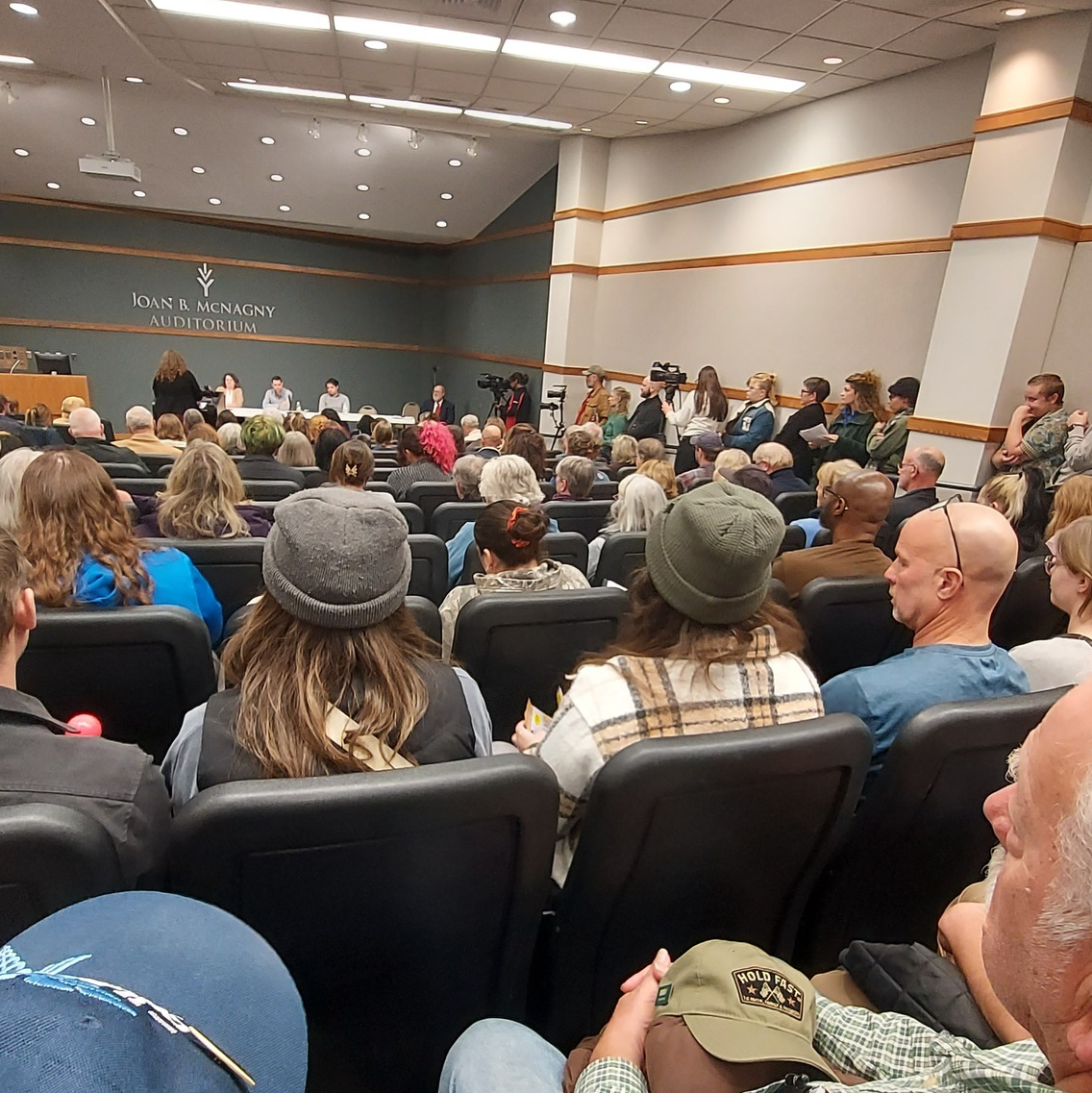
At recent public hearings with state environmental regulators (IDEM) and City Council, many citizens across the political spectrum have voiced concerns about the Google data center in Southeast Fort Wayne.
A top concern right now is the project’s air quality permit under review with IDEM, seeking to increase the number of backup diesel generators on site, from 34 requested in September 2024 to 179.
Along with the obvious pollution and public health concerns, citizens voiced frustration with City Council and other local leaders for permitting the project’s secrecy and tax abatement.
- Secrecy: The Google data center received its early approvals for tax abatements and rezoning from local government, like City Council, in late-2023, under the names Hatchworks and “Project Zodiac.” It did not request its initial 34 diesel generators until more than eight months later, followed by a recent 5x increase in this number.
- Tax abatement: In 2023, City Council granted the project a 10-year, 50% tax abatement on real property taxes for each building constructed, saving Google an estimated $55.5M during the first 10 years. Google also agreed to pay Fort Wayne a minimum of $1M in taxes annually– a figure that increases to $1.2M or more once the company develops four buildings.
So… how unusual is it for projects of this magnitude in Fort Wayne to operate with secrecy, receive tax abatements and change their plans? And how might public frustration demonstrated at public hearings result in better public policy?
To inform this report, we spoke with:
- Geoff Paddock, City Council President (D-5)
- Mitch Harper, former City Council representative (R-4) and state legislator
Here’s a quick summary of what we learned:
First, it’s not too unusual for projects with large geographic footprints to keep their early dealings quiet, like Google’s “Project Zodiac.” Harper says local government has done this on several occasions (think International Harvester) to maintain trust with corporate partners and prevent cutouts or straw buyers from bidding up land prices.
However, it’s worth noting that CNBC featured Fort Wayne’s data center as an example in its national report, explaining how third-party LLCs (like Hatchworks) can create confusion about which companies are asking for tax breaks.
There are a few other factors that make Google’s secrecy and tax abatement unique in Fort Wayne, too.
- City Council and other local leaders likely didn’t know much about the nature of fast-evolving, loosely regulated data centers when they approved Project Zodiac in 2023. In recent years, data center growth and public awareness has increased rapidly with the AI arms race. Paddock says he and other council members largely didn’t know to ask questions about things like backup generators when they gave the project its early approvals.
- Google’s project scope has vastly expanded in Fort Wayne (adding 140+ diesel generators) since it was initially approved. Paddock says during his 14 years on council, he does not recall another corporate partner changing its plans to this degree after receiving initial approvals for tax abatements and zoning from City Council. He recalls there were only a few objections to “Project Zodiac” in 2023 when council approved it, noting that then-Gov. Eric Holcomb and Mayor Tom Henry both supported it. But as the project has progressed, its plans – and public sentiment – have changed.
- Google’s data center will create fewer jobs and (arguably) less long-term benefits for the local community compared to other large companies (like Harvester) that have received tax incentives in the past. Google is promising to produce “up to 200 jobs” in Fort Wayne that pay an average salary of about $64,993 – about 125% of Allen County’s average wage. But 200 jobs is significantly lower than Harvester’s 10,000+ jobs at its peak. Thus, some say Google’s benefits to Fort Wayne don’t justify its tax breaks – especially considering environmental factors and the tech giant’s unprecedented wealth, valued in the trillions.
How does this compare to what’s happening nationally?
- Indiana is one of 37 states that have passed legislation granting sales tax exemptions for data centers – a move CNBC reports is causing states to forfeit “hundreds of millions of dollars in tax revenue to tech companies.” It notes that “tax breaks have long been a tool states use to compete for businesses,” but “for data centers the tradeoffs are iffy, because the facilities don’t tend to create large numbers of jobs, while the amount of electricity required can be immense.”
- This has set the stage for what some national watchdogs are calling a losing proposition for taxpayers: “When tax breaks don’t pay for themselves, only two things can happen: Either public services are reduced in quality, or everybody’s taxes go up in other ways if you’re going to try to keep things the same in terms of quality of public services.”
So what happens now?
- Paddock says he still supports the Google data center in Fort Wayne and believes it will pay off for Southeast in the long run by providing “high-wage jobs” and tax revenue from land that was previously underutilized, boosting the Southeast tax base. (The property previously generated about $30,000 in annual property taxes, The JG* reports.)
- Paddock also sent letters to IDEM and Google, requesting “the strictest possible environmental standards for the Google Data Center requested air permit” and seeking a public hearing in December where citizens can speak directly with Google representatives. He hopes this will “restore goodwill” between citizens and Google and result in cleaner alternatives to the data center’s 179 diesel generators.
- If this doesn’t happen, City Council might be able to rescind Google’s tax abatement for failing to comply with its original agreements. Council annually reviews and rescinds tax abatements to corporate partners that don’t deliver on their promises. However, Paddock says it’s unclear how this might work in Google’s case, and he hopes it doesn’t come to that.
Why it matters
Regardless of what happens with the Google data center, the project has raised awareness about a few important issues locally, including:
- A lack of understanding and engagement in local politics. Harper attended the IDEM public hearing a few weeks ago where he says many residents (mis)directed their complaints to staff taking public testimony – rather than actual decision-makers. He hopes the data center debate will inspire citizens to inform themselves about local politics and get more hands-on. “If people are concerned about projects like Google and a lack of public transparency, it really comes down to supporting and voting for candidates who will challenge the current status quo,” Harper says. ”It might feel good to speak at public hearings, but how many people in Fort Wayne have joined political campaigns, or distributed flyers for candidates they care about, or gone door-to-door? Those are the actions that can really move the needle.”
- A lack of access to insightful, hyper-local political news. Harper says that as local news organizations, like The Journal Gazette, have contracted in recent decades, the city has lost access to key political insights from reporters who are in the know about political party rules and personalities. This has created a gap in information – and engagement – from citizens who generally have less time, connections and know-how to navigate local politics, as well as less coverage of public meetings. (One great resource for political news at the state level is the Indiana Capital Chronicle.)
- Vulnerabilities in Indiana’s system for tax abatements and other “business-friendly” practices. Since they were first utilized in 1977, tax abatements have been controversial economic development tools in Indiana. Paddock says he and others in Fort Wayne have worked to rein in the process locally, and most abatements approved annually in Fort Wayne do deliver on their promises and are not given to trillion-dollar, Google-sized corporations. However, recent state laws have made Indiana cities more vulnerable to getting taken advantage of by big tech companies that can easily access tax breaks without many consequences if they fail to maintain their end of the bargain.
Our two cents: Citizens not having access to insightful, timely news and information is one of our founding reasons for creating The Local, and a lot more work is needed to improve the city’s journalism scene. We’re painfully aware that Fort Wayne needs additional, thoughtful and informed political reporters – like many cities. This lack of journalism (nationally) combined with the fast-evolving rise of the internet, social media, AI, and so many other factors has created the perfect storm for corporations with unprecedented amounts of money, information and power to take advantage of our systems – both locally and nationally.
After talking with Harper and Paddock – both of whom have taught citizens about politics and local government in the past – we’re gathering some ideas for events we might put together in 2026 to help bridge gaps in local political knowledge and better equip citizens who want to make a difference here. At a time when so much about politics feels divisive, information about improving civics education, public transparency, government spending and ways we can take care of our neighbors all seems like a powerful nonpartisan cause that might help knit communities together. Hit reply to this email, and send us any ideas you have.
Thanks for your time, consideration and support for local journalism. Have a good weekend, Locals!
Kara Hackett