
Is Electric Works working? And what's happening behind-the-scenes?
Hey Locals,
One of our biggest stories last year was breaking news on some concerning developments at Electric Works, including lawsuits related to its leadership and funders.
- Long story short: We started looking into this when multiple readers informed us that a significant leader on campus and owner of the project’s anchor dining tenant (Scott Fergusson of Chapman’s Brewing) was involved in multiple legal cases, some dating back to April 2020 — before Chapman’s signed its letter of intent to locate at Electric Works in November 2021.
- Perhaps most notably: A key Electric Works investor Tim Ash’s investment management company, Ash Crest Corp., was one of the plaintiffs suing Fergusson for $745,000 (plus interest and damages) for “a loan related to Fergusson’s interest in Chapman’s Cider Company, LLC,” which it says Fergusson did not comply with “in any way.” The deal was made in April 2021, and the suit was filed in August 2024.
- Since then: Fergusson lost the case in July 2025, but has not yet settled the damages with Ash Crest Corp. A meeting is scheduled for March 30, 2026, when Ash Crest will collect its debt, which has been accruing more interest and now totals more than $1M. (Fergusson settled his other two lawsuits we reported on last year.)
So why does any of this matter? And how does it relate to what’s happening at Electric Works now?
Here are two quick things to know:
- Operations management on campus is currently in flux under the leadership of Fergusson's company 3PO. At the time of our report last year, Fergusson and 3PO (Three Pillar Operations) had recently taken over multiple public-facing parts of the project: Managing all bars on campus as well as the Union Street Market food hall, campus events and coworking. Previously, these roles had been assigned to multiple staff members and partners (like Carr Workplaces). But Electric Works leadership (like Jeff Kingsbury of RTM Ventures) decided to consolidate the roles under one team, under Fergusson’s leadership, despite knowing about his legal challenges. (See our interview with Kingsbury and Fergusson here.) Now, we’re seeing the fallout of that decision. (More on this later.)
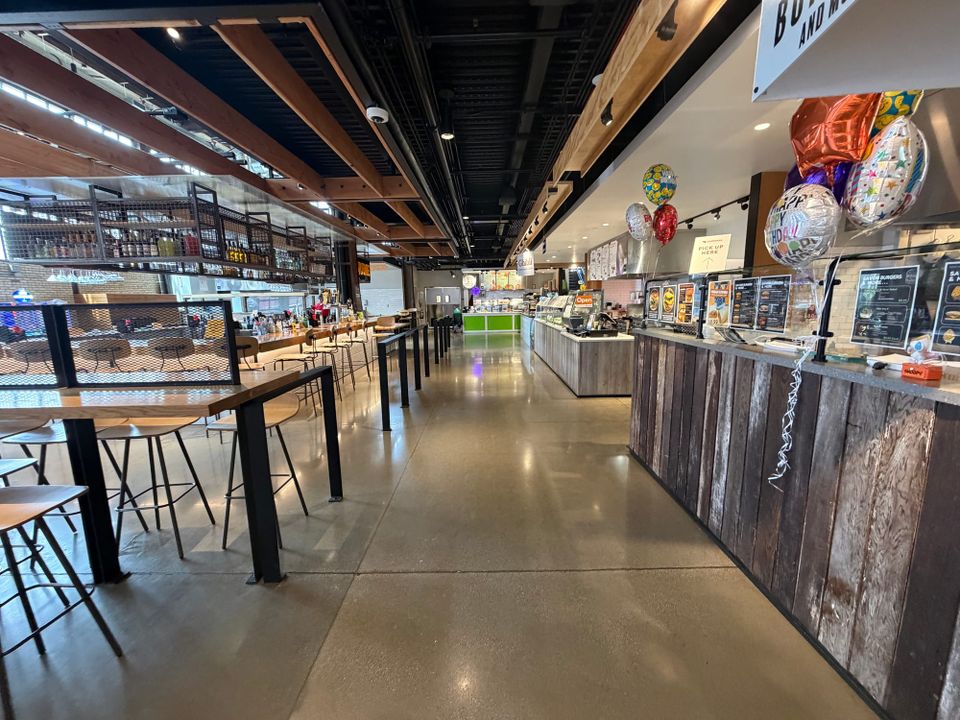
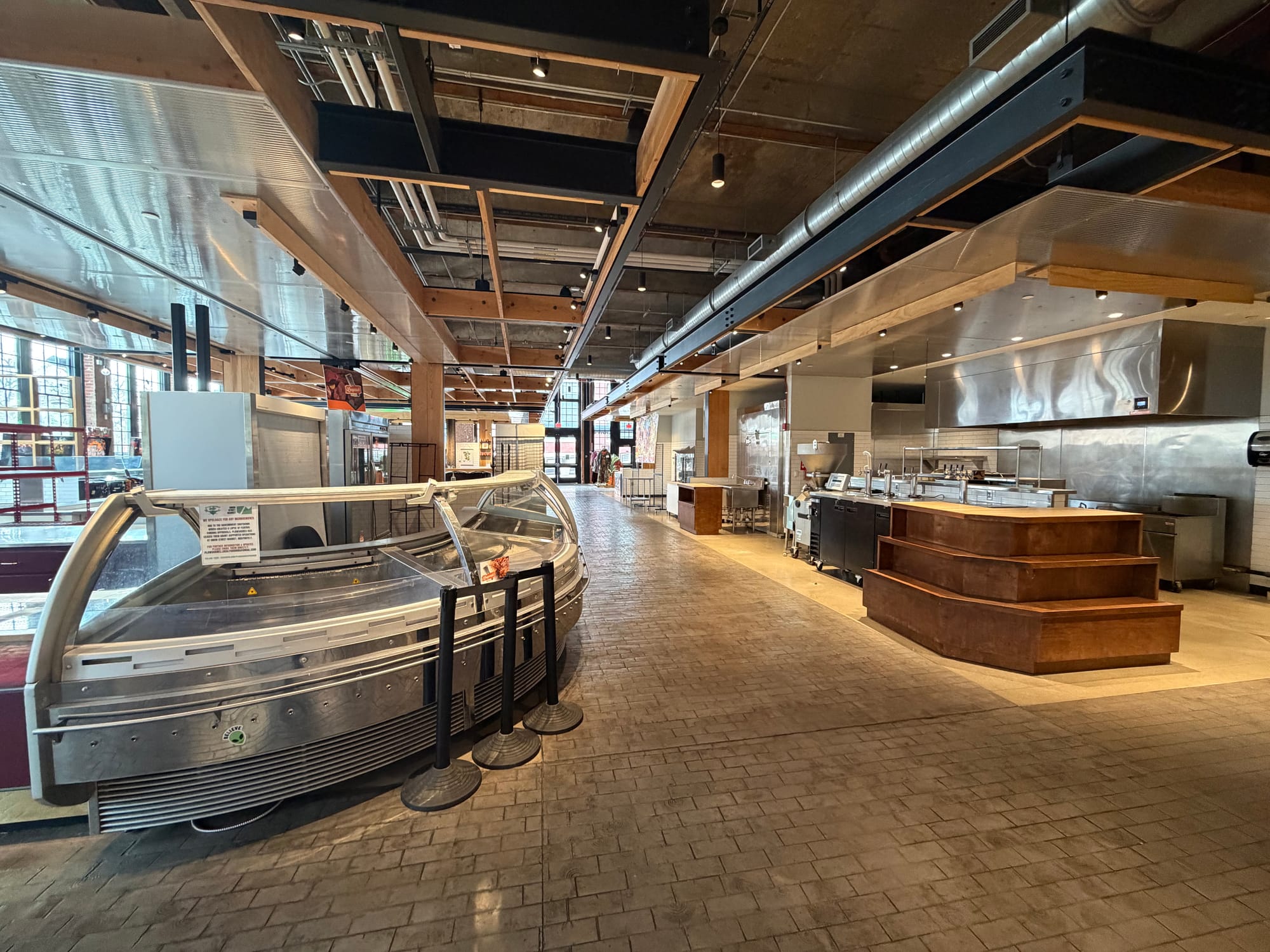
- The Union Street Market (USM) food hall is still lacking much activity and has a lot of vacant stalls. Fergusson’s 3PO was contracted to manage USM, which, per the City’s 2020 contract with Electric Works, was to be “a dynamic and inclusive place that supports the farmers and food producers of Northeast Indiana while enhancing community wellness and providing access to healthy foods to underserved residents.” The contract also mandated the creation of a nonprofit Public Market Trust to oversee the market’s mission and ensure its management was delivering. But clearly, between 3PO and the Trust, something is amiss. At a recent visit to the food hall during lunch hours, we found it mostly empty of consumers, with 10/14 vendor stalls vacant in East Hall and 3/12 vacant in West Hall.
So… what exactly is happening at Electric Works?
We did some emailing and digging this week to see what we could find out, and while our report is far from complete, it provides what might be the clearest picture of what’s happening on campus to date.
To develop this report, we reached out to several contacts, including, but not limited to:
- Ferguson Advertising (Electric Works PR)
- Biggs Group (Developers of The Elex)
- Electric Works website media inquiries
- Members of the Public Market Trust
- Plowshares Food Hub
Here’s a quick summary of what we learned:
- It’s hard to get “official” information about Electric Works. Three of the main contacts we reached out to, including Ferguson Advertising, Biggs Group and the Electric Works website, did not respond to our request for information, including the current occupancy rates of housing, office and retail space on campus.
- The information that does exist about the project’s status is self-reported and vague. Electric Works self-published a report in 2024 touting its projected economic impact of $375 million “upon completion and full occupancy,” but otherwise didn’t include current financial specifics or independent analysis. A 2025 report in the Journal Gazette* said Electric Works could reach “stability” by 2026, according to its developers. At the time, they said its workspaces were 75% leased, and Union Street Market was approaching 80% capacity. But since then, numerous tenants have left USM, and no follow-up to this data has been published (as far as we can tell). To be fair, we also didn’t find anything in the City’s 2020 contract with Electric Works that mandated any reporting/independent impact analysis of the project.
- It’s also really confusing trying to untangle the web of which people (and entities/acronyms) own and manage which parts of the project. There are multiple entities involved in the project's development and ongoing management, and a lot of them involve the same people. For instance, the project’s developer RTM Ventures is made up of Jeff Kingsbury and Josh Parker (of Ancora, based in Washington, DC) as well as Kevan Biggs of Biggs Group in Northeast Indiana. But Jeff and Josh also created a separate company, BSW, which hires the management team for Electric Works, including its contractor, Three Pillar Operations or 3PO (Scott Fergusson, Zach White and Danielle Tomei). And members of 3PO also run Chapman’s Brewing Company, the anchor dining tenant on campus.
- Sources tell us 3PO’s leadership is in transition. We’ve heard that Tomei left the group, and Scott Fergusson is also leaving 3PO this week. That means Zach White is now presumably the sole member of 3PO and has an even bigger and more difficult amount of responsibility to handle on campus. It’s unclear if/how Fergusson’s ongoing legal debts might have played into this decision and might affect the future of 3PO and Chapmans. We reached out to him for comment and did not hear back in time for publication.
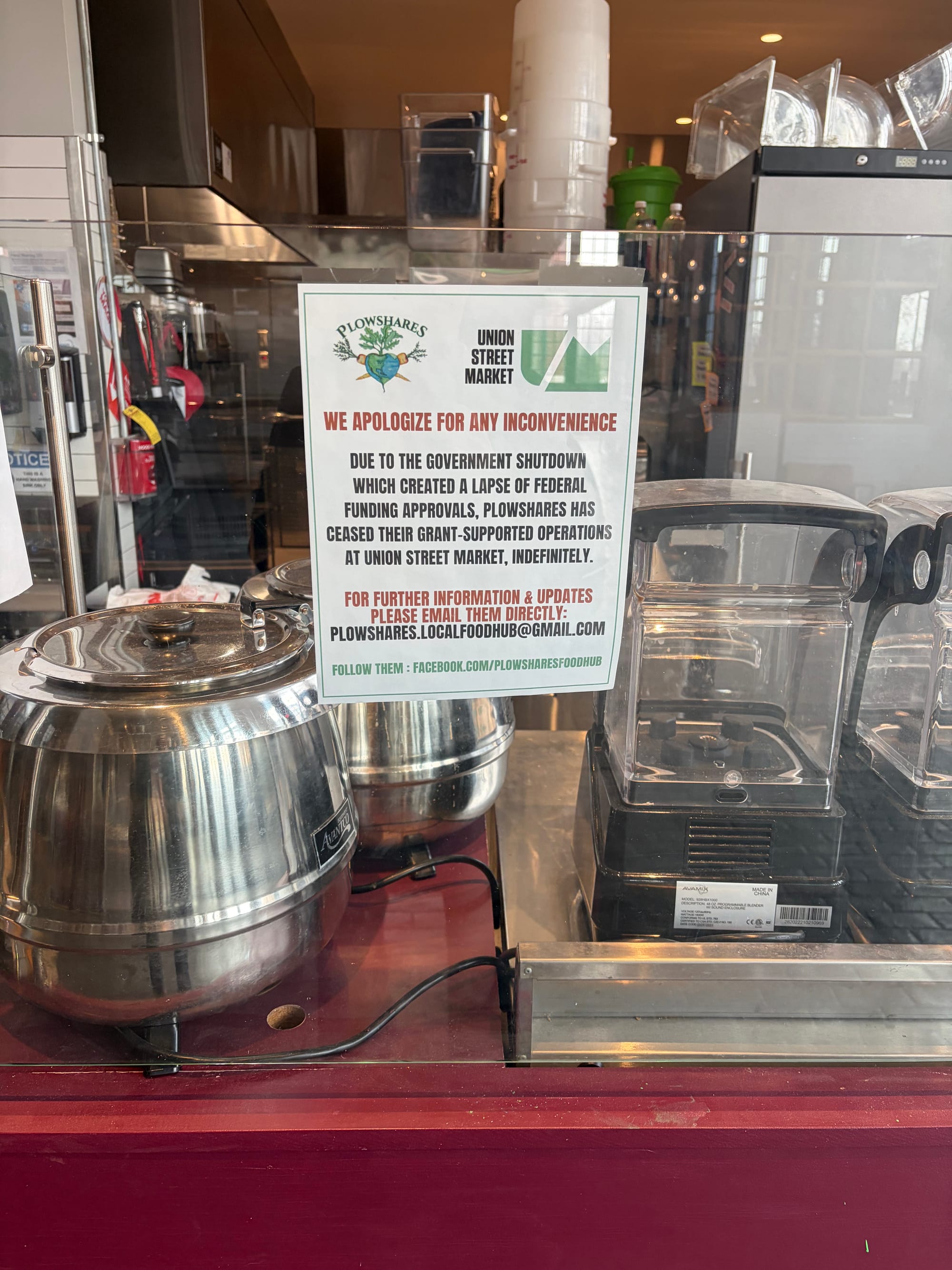
- Challenges on campus and at Union Street Market extend beyond 3PO’s management. Electric Works is a huge undertaking, and along with setbacks from the pandemic, the project and its partners have also faced challenges with other hurdles, like federal grants. Earlier this year, we caught up with Plowshares on why they vacated their stalls at USM, which provided a significant source of fresh, local produce to the food hall's mission. They said they have been awaiting delayed federal funding decisions under the Trump administration since last fall, and they updated us this week that they’re still waiting to see if/when they might receive funding. They have been in touch with Senator Jim Banks’s office regarding this issue.
- Members of the Public Market Trust say they are meeting and are still optimistic about the project as a whole. Riley Johnson, Principal at AMP Lab High School and member of the Public Market Trust, says the Trust meets monthly or bi-monthly and works to strengthen “community connection" and define “benchmarks needed to ensure the PMT lives up to its purpose.” The PMT is also involved in hosting Summit City Farmers Market on Saturdays. Joel Sauer, a recent addition to the Public Market Trust and President of the West Central Neighborhood Association tells us the Trust is focusing on “expanding the availability of fresh (non-processed) food at [Union Street Market]” and noted that “the development of Electric Works has been nothing but positive to the neighborhood.” He hopes to see an uptick in traffic for the market as the project’s housing developments move forward.
- Still, rumors are circulating about staff/contractors with the project not being paid on time and/or being overworked. We’ve heard from multiple sources that Electric Works has failed to pay some of its contractors at the time their payment was due, but in many cases, they later settled these debts. We’ve also learned that large jobs on campus, like marketing and social media, have been consolidated into single contractor positions instead of entire departments of employees, which you might expect for a campus and project of this magnitude.
Our two cents:
Is Electric Works delivering on its promises to Fort Wayne?
In the absence of updated data on campus leasing and occupancy, we can’t assess how successful the project is/will be, as a whole. But based on what we’ve gathered, it appears the project has been most successful at attracting/supporting office tenants, like Do it Best, as an office park. The problem is: the City of Fort Wayne didn’t give $65M in public funding to the project for an office park, and other elements of the campus (that were pitched for public funding) don’t appear to be meeting the mark – most notably: the campus’s “cool factor” as a community hub and its source of fresh, affordable food for an underserved area.
When it comes to what could have gone better, there are many factors that have been out of the project team’s hands, like the pandemic and questionable support from key partners, like the City and then-Mayor Tom Henry. But there are also a lot of factors that have been within the team’s control, like prioritizing office space over housing in early phases of the project, not having a clear marketing strategy (or marketing team) for campus, and promoting 3PO to manage so much of the project despite knowing about Fergusson’s legal issues.
From what we’re seeing, there seems to be Parkview-Field of Dreams mentality at play here, where developers assumed they could build nice buildings near Downtown, and people would come automatically. But projects – especially ones as big and complex as Electric Works – require capable teams not just to build the buildings themselves, but also to activate, manage and strategize for them on an ongoing basis. That seems to be where the ball is being dropped.
Perhaps if there were a significant change in management for campus, all of these beautiful and seemingly well-designed spaces wouldn’t feel so devoid of the culture and community they promised to create.
Your Reporter and Editor,
Rachel Horton and Kara Hackett